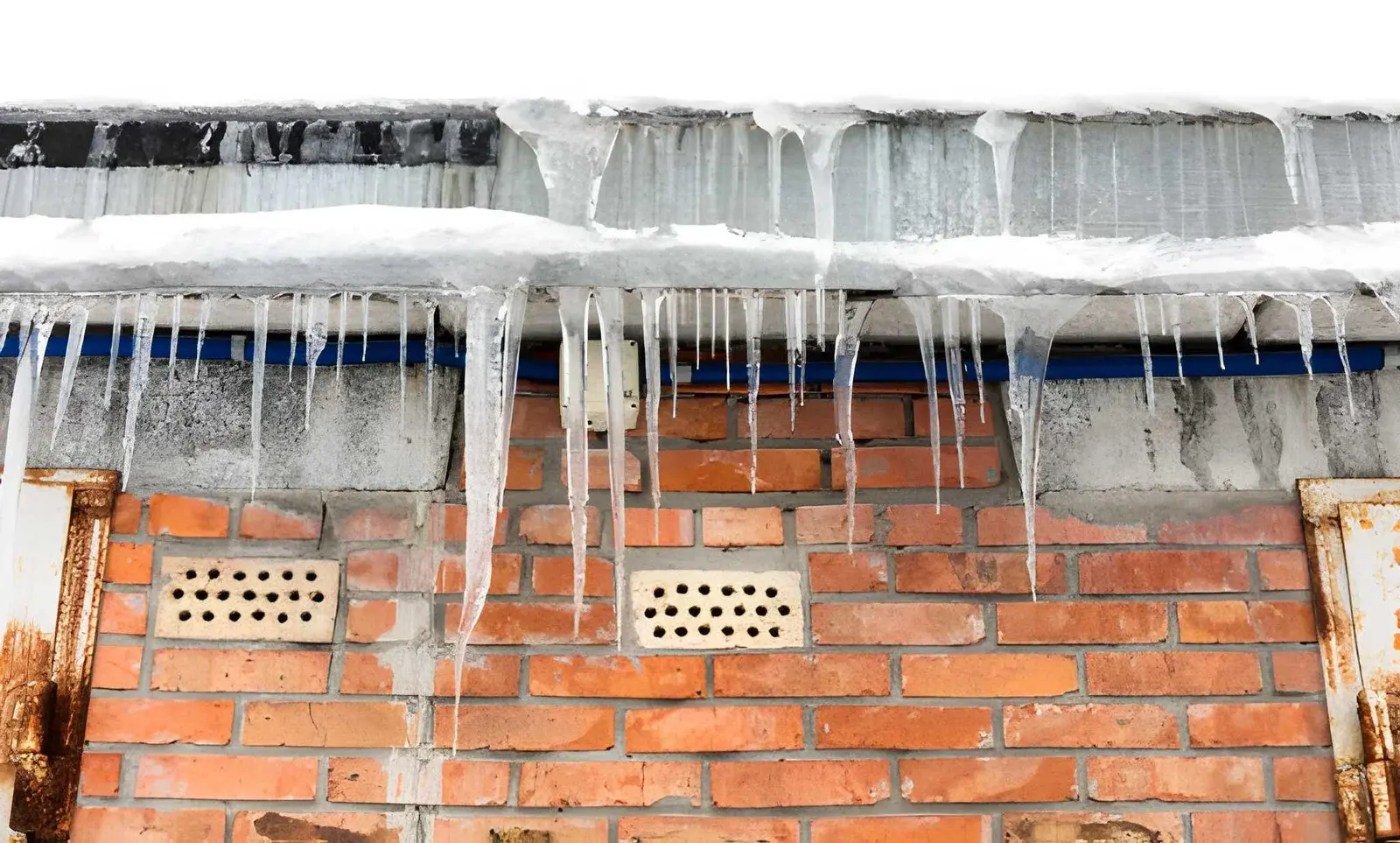

Snow on a roof can look harmless until water appears on an upstairs ceiling. One possible cause is an ice dam: a ridge of ice that develops near a roof edge and prevents melting snow from draining normally. Water then collects behind the ridge and may find a path beneath roofing materials. The visible ice is only part of the problem. Conditions inside the attic often determine whether it returns after the next snowfall.
How an Ice Dam Actually Forms
An ice dam needs a temperature difference across the roof. Heat escaping from the living space can warm portions of the roof deck and melt the snow above. That water moves downhill until it reaches the colder overhang. There, it freezes. With repeated melting and freezing, the ice ridge grows and blocks drainage.
This explains why a roof can develop ice dams even during a cold winter. Sunlight and fluctuating outdoor temperatures can contribute, but indoor heat leakage often makes the problem worse. Large icicles suggest a drainage or melting issue; however, icicles alone do not prove that an active leak exists.
Look for the Causes in the Attic
Homeowners often focus on removing ice from gutters. Yet lasting prevention starts with the attic. Unsealed openings around recessed lights, plumbing penetrations, access hatches and duct chases can let warm indoor air rise toward the roof. Inadequate insulation may allow additional heat to move through the ceiling.
A qualified contractor can examine these leakage paths and recommend suitable sealing and insulation. The Department of Energy’s attic-insulation guidance specifically identifies a sealed and insulated attic as a way to reduce ice-dam risk. Insulation should cover the ceiling plane consistently without blocking designed ventilation paths.
Keep Roof Ventilation Working as Designed
In a conventional vented attic, soffit intake and ridge or roof exhaust vents help move outdoor air through the space. Stored boxes, poorly fitted insulation or later renovations can block those paths. A contractor should inspect the entire assembly rather than simply adding more vents.
Not every roof uses a vented attic. Some homes have intentionally unvented roof assemblies, which require a different moisture and thermal strategy. Mixing approaches without understanding the construction can create condensation problems. Consequently, the correct solution depends on how the particular roof was designed.
Manage Snow and Water Without Taking Dangerous Risks
After significant snowfall, homeowners may consider using a roof rake from the ground to clear snow near accessible eaves. Follow the tool maker’s instructions, keep clear of power lines and falling snow, and avoid damaging shingles. Never climb an icy roof or chip frozen material with sharp tools. Steam removal by an experienced professional may be appropriate when a dam already threatens interior spaces.
Inside the house, act quickly if you discover staining or dripping. Protect belongings, contain water safely and call a roofer to assess the exterior. If moisture reaches electrical fixtures, keep away and contact an appropriate professional. Also dry wet materials promptly to reduce further damage.
Build Prevention Into Roof Repairs
When replacing a roof in a cold region, ask the contractor about appropriate underlayment at vulnerable eaves, flashing details and local code requirements. Ice-and-water protection helps resist water intrusion, but it does not correct excessive attic heat loss. The DOE guidance on cold-climate eaves connects roof-edge protection with air sealing and insulation.
Conclusion
The safest long-term ice dam strategy is to reduce unintended heat movement, preserve the roof’s intended ventilation design and maintain reliable drainage. Instead of repeatedly fighting the ice outside, address the building conditions that allow it to form.
Also READ
- WTE Meaning in Text: What It Really Means in Chats, Social Media & Online (2026 Guide)
- TS Meaning in Text from a Boy: What It Really Means in Messages (2026 Guide)
- THX Meaning in Text: What It Really Means, When to Use It & Why It’s Still Popular in 2026