Last updated on September 12th, 2026 at 02:26 am
Ever seen someone type “STSU” in a chat and wondered what it meant? You’re not alone. Internet slang changes fast, and new abbreviations pop up almost every week on TikTok, Snapchat, Instagram, and group chats.
STSU is one of those short texting terms that can confuse people at first glance. Depending on the conversation, it can sound funny, rude, playful, or sarcastic. That’s why so many people search for its meaning online.
In most cases, STSU is used during casual chats, gaming conversations, memes, or social media comments. Younger users, especially Gen Z and online communities, often use it to react quickly without typing a full sentence.
If you’ve received “STSU” in a message or saw it in a comment section, this guide breaks down exactly what it means, how people use it, and when you should — or shouldn’t — use it yourself.
What Does STSU Mean in Texting?
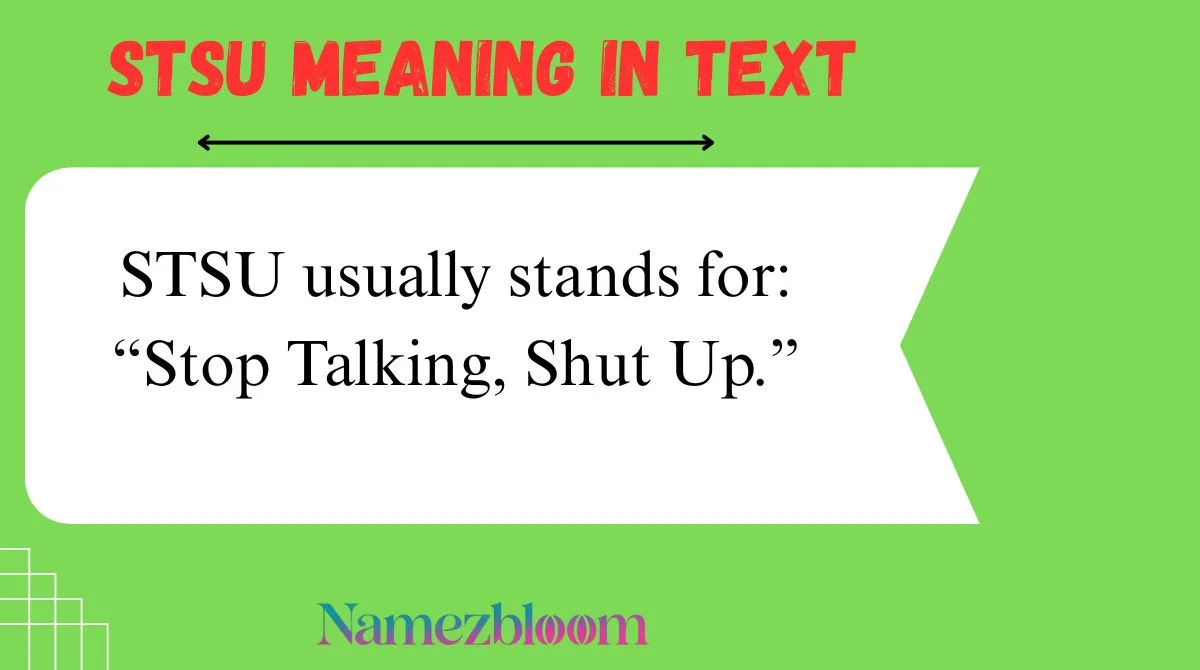
STSU usually stands for:
“Stop Talking, Shut Up.”
It’s a slang abbreviation people use online when reacting to something surprising, annoying, funny, or unbelievable.
Sometimes it’s said jokingly between friends. Other times, it can come across as rude depending on the tone and situation.
For example:
- “STSU 😭 that story is ridiculous”
- “Bro STSU you actually did that?”
- “STSU I can’t stop laughing 💀”
In many chats, people don’t mean it aggressively. Instead, it’s often used as exaggerated internet humor.
Full Form & Short Meaning of STSU
| Term | Full Form | Short Meaning |
|---|---|---|
| STSU | Stop Talking, Shut Up | Be quiet / no way / stop joking |
The meaning changes slightly based on context.
Sometimes it literally means “be quiet.”
Other times it simply means:
- “I can’t believe this”
- “You’re joking”
- “That’s wild”
- “Stop, that’s too funny”
Tone matters a lot in texting slang.
STSU Meaning in Text From a Girl
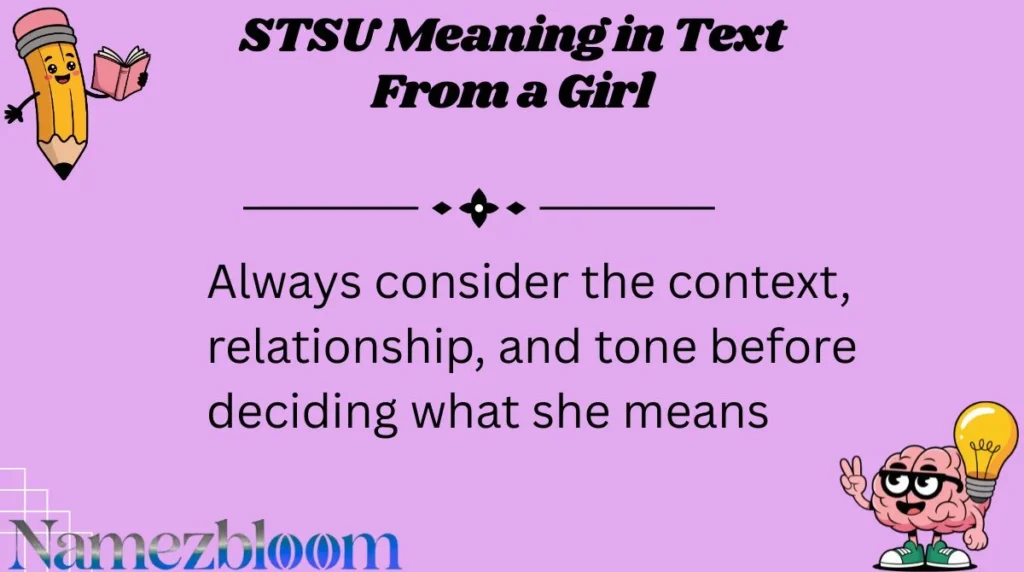
When a girl texts you “STSU,” it usually means “Stop Talking, Shut Up,” but the exact tone depends on your conversation. In a friendly chat, she may use STSU jokingly when you say something funny, embarrassing, surprising, or overly confident. For example, if you tell her, “I’m the funniest person you know,” she might reply, “STSU 😭” as a playful reaction rather than genuinely telling you to be quiet.
In some situations, STSU can also show disbelief or playful annoyance. Emojis like 😂, 😭, or 💀 often make the message feel less serious. However, if she sends STSU during an argument or serious conversation, it may be meant literally and could sound rude. Always consider the context, relationship, and tone before deciding what she means
Origin & History of STSU
STSU comes from classic internet abbreviation culture. People have shortened phrases in chats for decades to type faster and sound casual online.
The phrase “shut up” has long been used jokingly among friends. Over time, internet users turned longer reactions into shorter acronyms.
As texting culture evolved through platforms like:
- AOL chats
- Online gaming
- Twitter/X
- Snapchat
- TikTok
- Discord
…slang became shorter and faster.
STSU likely gained popularity through meme culture and reaction-based conversations where quick emotional replies became common.
Today, it’s mostly seen in informal digital communication.
Why Do People Use STSU Online?
People use STSU because it feels fast, expressive, and dramatic.
Instead of typing a full emotional response, users can send four letters and instantly show shock, disbelief, or playful annoyance.
Here are common reasons people use it:
1. To React to Something Funny
- “STSU that meme is hilarious 😂”
2. To Show Disbelief
- “STSU you met him for real?”
3. To Tease Friends
- “Nah STSU you always lie 💀”
4. To End a Conversation Playfully
- “STSU and go to sleep already 😭”
In many cases, it’s more about emotion than literal meaning.
STSU Meaning on Snapchat, TikTok, Instagram & WhatsApp
Snapchat
On Snapchat, STSU is often playful and emotional. Friends use it while reacting to selfies, gossip, or funny snaps.
Example:
- “STSU you look so good 😭”
TikTok
TikTok comments are full of dramatic slang. STSU is commonly used under shocking videos, funny edits, or relatable clips.
Example:
- “STSU this is literally me 💀”
On Instagram, it appears in DMs, reels comments, and meme pages.
Example:
- “STSU I can’t stop watching this 😂”
On WhatsApp, usage depends on the friend group. It may sound harsher in serious conversations because tone is harder to read.
Example:
- “STSU and listen for once.”
Different Meanings of STSU in Other Contexts
Although “Stop Talking, Shut Up” is the most common meaning, STSU can occasionally have different interpretations depending on the group or community.
Some users may use it as:
- “Stop Talking So Much”
- “Seriously, Shut Up”
- A sarcastic reaction phrase
However, these are less common.
Unlike slang terms with many definitions, STSU usually keeps the same general idea: telling someone to stop talking in a dramatic or joking way.
Real Chat Examples of STSU
Here are realistic examples showing how people actually use STSU online.
- “STSU 😭 that’s the funniest thing I’ve heard all day”
- “Bro STSU you did NOT text your ex again 💀”
- “STSU I’m trying not to laugh in class”
- “Nahhh STSU this story is fake 😂”
- “STSU you’re actually obsessed”
- “Girl STSU and tell me everything 👀”
- “STSU that outfit is fire”
Notice how the tone changes depending on emojis and context.
How to Reply to STSU
Not sure how to respond? Here are some natural replies.
Casual Replies
- “I’m serious 😭”
- “No because listen…”
- “You know I’m right”
- “I can explain 💀”
Funny Replies
- “Never.”
- “Make me 😂”
- “I said what I said.”
- “Too late now 😭”
Serious Replies
- “Alright, calm down.”
- “I didn’t mean it like that.”
- “Let’s talk normally.”
Flirty Replies
- “You like hearing me talk though 👀”
- “Can’t help it around you.”
- “You’d miss me if I stopped 😭”
Common Confusions & Mistakes
Many people misunderstand STSU because internet slang relies heavily on tone.
Here are common mistakes:
Thinking It’s Always Rude
Not always. Friends often use it jokingly.
Using It With Strangers
It can sound disrespectful if the other person doesn’t know your humor.
Misreading the Mood
Without emojis or context, STSU may feel aggressive.
Confusing It With Other Acronyms
People sometimes mix it up with terms like:
- STG
- ISTG
- SMDH
- IDK
- FR
Each has a completely different meaning.
Similar Slang Terms & Alternatives
Here are related slang expressions people use in similar situations:
| Slang | Meaning |
| ISTG | I swear to God |
| FR | For real |
| SMDH | Shaking my damn head |
| LMAO | Laughing hard |
| IHY | I hate you (often jokingly) |
| BFFR | Be for real |
| OMG | Oh my God |
| BRUH | Expression of disbelief |
These terms often appear together in Gen Z conversations.
Is STSU Still Popular in 2026?
Yes, STSU is still used in 2026, especially among younger internet users and meme-heavy communities.
However, it’s not as universally popular as slang like:
- LOL
- FR
- IMO
- LMAO
Instead, STSU appears more in casual friend groups, TikTok comments, gaming chats, and reaction memes.
Internet slang trends change quickly, but expressive reaction acronyms continue to stay popular because they’re short and emotionally powerful.
Gen Z and younger users especially enjoy dramatic abbreviations that make conversations feel more entertaining.
STSU Meaning in Text From a Guy
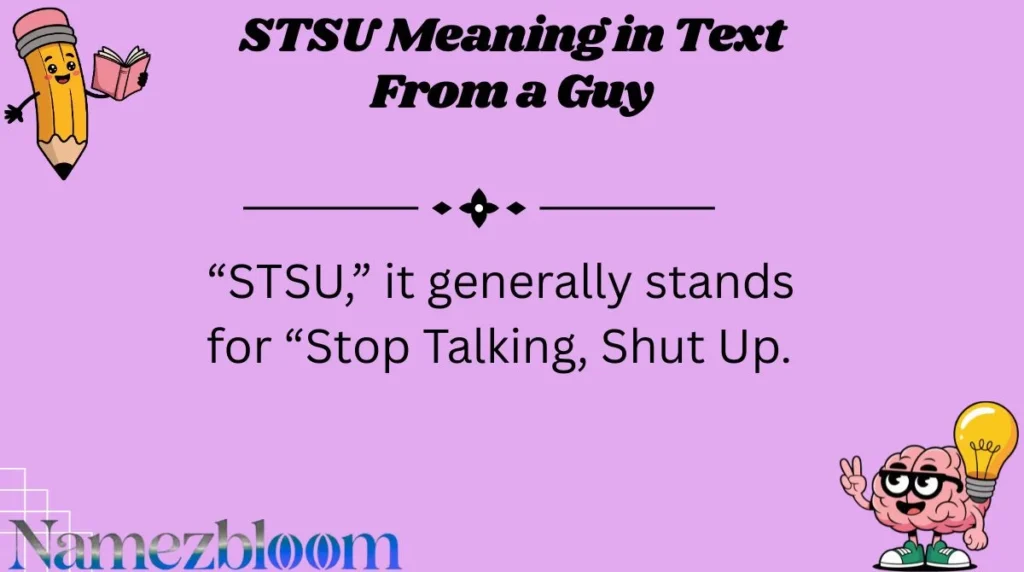
If a guy texts you “STSU,” it generally stands for “Stop Talking, Shut Up.” However, it does not always mean that he is actually angry or wants you to stop talking. Among friends, guys often use STSU as a funny or exaggerated reaction to something unbelievable, embarrassing, or hilarious. For example, if you tell him a crazy story, he might respond, “STSU bro 💀” simply because he cannot believe what you said.
The tone can change depending on the situation. An STSU followed by laughing emojis may be playful, while a short “STSU” during an argument can sound more serious or disrespectful. If you’re unsure about his intention, look at the messages before and after it. In most casual conversations, STSU is simply a dramatic way to react rather than a serious insult.
Quick Meaning Table
| Term | Meaning | Usage | Platform | Tone |
| STSU | Stop Talking, Shut Up | Reaction slang | TikTok, Snapchat, Instagram, WhatsApp | Funny, sarcastic, playful, sometimes rude |
FAQs
What does STSU mean from a girl?
Usually, it’s playful or dramatic. Tone depends on the conversation and emojis used.
Is STSU rude?
It can be. Between friends, it’s often joking. In serious chats, it may sound disrespectful.
What does STSU mean on TikTok?
On TikTok, it’s mostly used as a funny reaction to shocking or relatable content.
Is STSU flirting?
Sometimes. Friends or crushes may use it jokingly during playful conversations.
What’s the difference between STSU and STFU?
STFU is generally harsher and more aggressive. STSU is often softer or more playful online.
Can adults use STSU?
Yes, but it’s mainly common among younger social media users and texting culture.
Why do people say STSU with emojis?
Emojis help show tone. Without them, the message may sound too serious or rude.
Is STSU still trending?
Yes, especially in meme culture, TikTok comments, and casual online chats.
Conclusion
STSU is one of those internet slang terms that perfectly shows how modern texting works. Short, emotional, and slightly dramatic, it helps people react quickly during online conversations.
Most of the time, STSU means “Stop Talking, Shut Up,” but the tone changes based on context, emojis, and the relationship between people chatting.
It can be funny, teasing, sarcastic, or occasionally rude.
If you see it on TikTok, Snapchat, Instagram, or WhatsApp, don’t panic. In many cases, it’s just playful internet humor.
Like most online slang, the safest rule is simple: know your audience before using it. What sounds funny to friends may sound harsh to someone else.
And honestly, that’s what makes internet language so interesting in the first place.

“I am Alex Carter, a creative writer focused on discovering meaningful and unique name ideas.
I share well-researched naming inspirations to help brands, businesses, and ideas stand out.”